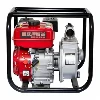
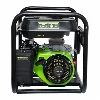
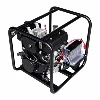
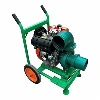
Designing a water pump requires a comprehensive consideration of various factors, including operational requirements, fluid characteristics, structural performance, power matching, and the operating environment. A well-conceived design not only ensures sufficient pumping capacity but also enhances operational efficiency, reduces energy consumption, and extends the equipment's service life. Given the wide range of applications, design priorities vary by use case: pumps for agricultural irrigation emphasize flow rate and stability; industrial pumps focus on durability and continuous operation capabilities; and pumps intended for specialized environments must prioritize corrosion and wear resistance.
Flow rate and head are the fundamental performance parameters in water pump design. Flow rate-the volume of liquid transported per unit of time-is a key indicator of pumping capacity. Head represents the pump's ability to overcome elevation differences and pipeline resistance, directly influencing the transport distance and discharge pressure. During the design process, appropriate ranges for flow rate and head must be established based on actual usage requirements to ensure the pump operates within its optimal range, thereby avoiding efficiency losses or increased equipment wear caused by parameter mismatches.
Hydraulic performance design is a core aspect of water pump development, encompassing components such as the impeller, pump casing flow passages, and inlet/outlet structures. For centrifugal pumps, factors such as impeller diameter, blade count, blade angle, and flow passage geometry significantly influence flow velocity, pressure conversion efficiency, and operational stability. Superior hydraulic design minimizes energy loss during fluid flow, reduces noise and vibration, and boosts overall pump efficiency. Furthermore, cavitation must be addressed; proper design mitigates the risk of bubble formation and performance degradation during high-speed operation.
Power matching is critical to ensuring proper pump operation. Designers must select a suitable motor or engine based on the pump's power requirements to ensure the power output aligns with the load. Insufficient power prevents the pump from achieving its design flow rate and pressure, while excessive power increases manufacturing costs and energy consumption. Consequently, factors such as motor power, rotational speed, efficiency, and starting characteristics must be carefully balanced to ensure the power system and pump structure work in harmony.
Material selection and structural strength design are also vital components of the water pump design process. During prolonged operation, water pumps are subjected to the impact of fluid flow, pressure fluctuations, mechanical friction, and corrosion; consequently, critical components such as the pump casing, impeller, and shaft must possess high strength and durability. While standard pumps for clean water may utilize materials like cast iron or stainless steel, pumps handling corrosive or impurity-laden fluids require corrosion-resistant and wear-resistant materials. Furthermore, a sound structural design should facilitate installation, maintenance, and the replacement of wear parts.
Sealing performance and reliability are equally critical considerations. Since fluid leakage can easily occur between the pump shaft and the casing during operation, appropriate sealing mechanisms-such as mechanical seals or gland packing-must be incorporated. The design of bearings, couplings, and lubrication systems also influences the equipment's service life. Optimizing structural fits, minimizing frictional losses, and enhancing the manufacturing precision of components can reduce failure rates and improve the stability of the pump during long-term operation.