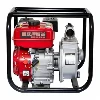
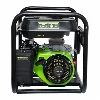
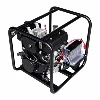
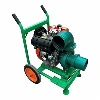
Water pumps are general-purpose devices used to transport liquids and increase liquid pressure; they find widespread application in agriculture, industry, construction, municipal services, landscaping, and daily life. Their primary function is to use a power source to drive the internal components of the pump, thereby moving liquid from a lower elevation to a higher one or transferring it from one location to another. With technological advancements, the structural designs and performance capabilities of water pumps have continuously improved, enabling them to meet operational requirements across diverse environments, media types, and transport specifications.
In agriculture, water pumps are essential components of irrigation systems. They are required to transport water for field irrigation, orchard watering, greenhouse water supply, and integrated water-and-fertilizer systems. By pumping water from sources such as rivers, wells, or reservoirs to farmlands or irrigation facilities, these pumps enhance water-use efficiency and reduce the physical labor associated with manual irrigation. In modern agriculture, water pumps are frequently paired with water-saving technologies-such as drip, sprinkler, and micro-irrigation systems-to ensure precise water delivery.
In landscaping and urban greening, water pumps are primarily used for plant irrigation, landscape water supply, and fountain systems. Urban parks, roadside green belts, residential landscapes, and plant nurseries require reliable water supply equipment to meet the daily maintenance needs of vegetation. Landscape sprinkler systems utilize pumps to generate the necessary pressure for the even distribution of water through nozzles, thereby improving maintenance efficiency. Additionally, landscape water circulation systems rely on pumps to drive water flow and ensure the proper operation of water features.
Water pumps have an even broader range of applications in industrial production. Manufacturing processes frequently involve cooling, circulation, fluid transport, and discharge; consequently, pumps are utilized in industrial circulating water systems, equipment cooling systems, chemical fluid transport, and process water supply. For instance, pumps drive the continuous flow of cooling fluid to dissipate heat generated during the operation of machinery. Furthermore, specialized sectors may require specialized equipment-such as corrosion-resistant or high-temperature pumps-to handle specific types of media.
In the fields of construction and municipal engineering, water pumps are primarily used for water supply and drainage, fire-fighting water systems, underground drainage, and sewage treatment. During construction, water pumps are used to drain foundation pits, preventing accumulated water from disrupting the construction schedule; meanwhile, high-rise building water supply systems rely on booster pumps to ensure adequate water pressure across all floors. In municipal drainage systems, sewage and drainage pumps help manage rainwater, wastewater, and sudden flooding, thereby enhancing the city's drainage capacity.
Water pumps are also widely used in residential water supply, aquaculture, fire protection systems, and the energy sector. Residential booster pumps increase water pressure to resolve supply issues; in aquaculture, pumps facilitate water circulation and aeration to improve the rearing environment; and fire pumps provide a reliable water source during emergencies, ensuring the proper functioning of fire protection equipment. New energy technologies, such as solar-powered water pumps, are also increasingly being adopted for water supply in remote areas and for agricultural irrigation.