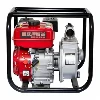
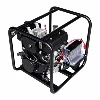
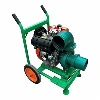
The key technologies of water pumps primarily encompass power conversion, fluid transport efficiency, structural design, operational control, and reliability assurance. As vital fluid transport equipment, water pumps must maintain stable operation across diverse environments while meeting specific requirements regarding flow rate, pressure, energy consumption, and service life. Driven by the escalating performance demands of agriculture, industry, and urban infrastructure, modern water pump technology is evolving toward higher efficiency, intelligence, and energy conservation.
Hydraulic design technology stands as a core element of water pump manufacturing, focusing on the optimal design of impellers, pump casing flow passages, and inlet/outlet structures. In centrifugal pumps, for instance, the impeller structure directly influences water flow velocity, pressure conversion efficiency, and operational stability. Optimizing blade geometry, impeller dimensions, and flow passage design helps minimize flow turbulence and energy loss, thereby boosting pump efficiency. Furthermore, sound hydraulic design mitigates cavitation, reduces vibration and noise during operation, and extends the pump's service life.
Efficient power matching technology is also crucial for ensuring optimal pump performance. Proper matching between the pump and its power source-such as an electric motor or engine-is essential to ensure that input power is effectively converted into fluid transport capacity. Undersized power configurations impose excessive loads on the pump, compromising efficiency and longevity, whereas oversized configurations lead to unnecessary energy consumption. Modern pumps increasingly utilize high-efficiency motors and variable frequency drives (VFDs) to automatically adjust operating speeds based on actual demand, achieving energy-efficient operation.
Sealing and wear-resistance technologies are vital for pump reliability. During prolonged operation, components such as shaft seals, bearings, and impellers are susceptible to wear, which can lead to leakage, reduced efficiency, or even equipment failure. Consequently, technologies such as mechanical seals, wear-resistant materials, and anti-corrosion coatings are employed to enhance the durability of critical components. Pumps handling fluids containing silt, impurities, or corrosive substances require specialized alloy materials, wear-resistant structural designs, and anti-corrosion treatments to withstand demanding operating conditions.
Intelligent control technology represents a key direction in the evolution of modern water pumps. Unlike traditional pumps that typically require manual startup and adjustment, intelligent pumps utilize sensors, controllers, and automated systems to monitor pressure, flow rate, and operating status in real time. For instance, variable-frequency control technology enables the automatic adjustment of motor speed based on actual demand, ensuring the water pump operates at peak efficiency; meanwhile, remote monitoring systems allow for the real-time tracking of operational data, facilitating the early detection of anomalies and reducing maintenance costs.
Energy-saving technology is also a key area of research in the water pump sector. Energy consumption during operation can be reduced by optimizing pump design, improving motor efficiency, minimizing pipeline losses, and employing intelligent control methods. In long-term operational scenarios-such as agricultural irrigation, industrial circulating water systems, and municipal water supply-high-efficiency, energy-saving pumps can significantly lower operating costs while curbing energy waste.